

Birds
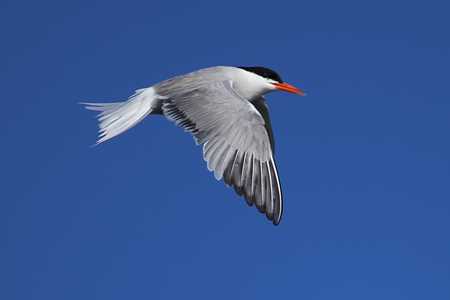
Common terns (Sterna hirundo) are a medium sized tern with narrow, pointed wings and a long forked tail. Its bill is orange-red often with a black point. Plumage is grey above, white below, with a dark cap to its head. Flight is buoyant, and will typically hover over the water before plunge before diving for prey mainly consisting of small fish. Easily mixed up with Artic Tern. Common Tern has a bigger head, longer bill, broader wings and slightly longer legs. Common tern underparts are are whiter than Artic Tern which has a grey wash.
Common terns have occasionally attempted breeding on the Louth shore but the main breeding area is on Green Island in Carlingford Lough, where breeding was regular in the past. However in recent years the island has eroded significantly and significant number of large gulls breed there, presenting a predation risk to tern chicks and eggs. Breeding has not been recorded there since 2018.
Elsewhere breeding in colonies in Co. Dublin, Co. Wexford and Co. Galway is regular, as well as on several freshwater lakes in the midlands. They overwinter in South and West Africa.
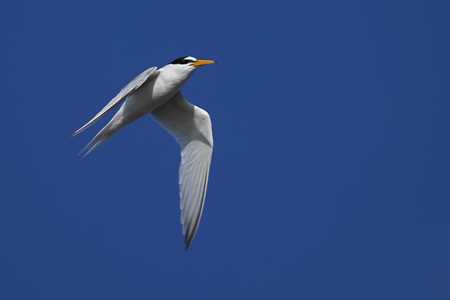
Little terns are the smallest of the tern species to visit Ireland and have an unmistakable yellow bill with a black tip, reddish legs, a black cap and a distinctive mask. Grey above and white below, the flight is buoyant, hovering, dipping before repeated diving for small fish such as sand eels, sprat and minnow. They require clear water to fish and prefer estuarine areas with access to fresh water, making the Boyne estuary ideal. They nest on sand, shingle, and packed shell habitats at the edge of the high water mark, which is present in mosaic at the Haven just north of the Boyne estuary in County Louth, from May to August each year. Little terns migrate to West Africa to overwinter.
They have been occasionally sighted in other parts of the Louth coastline, notably around Dunaney point, where breeding may have been attempted in the past.